 Astronomy
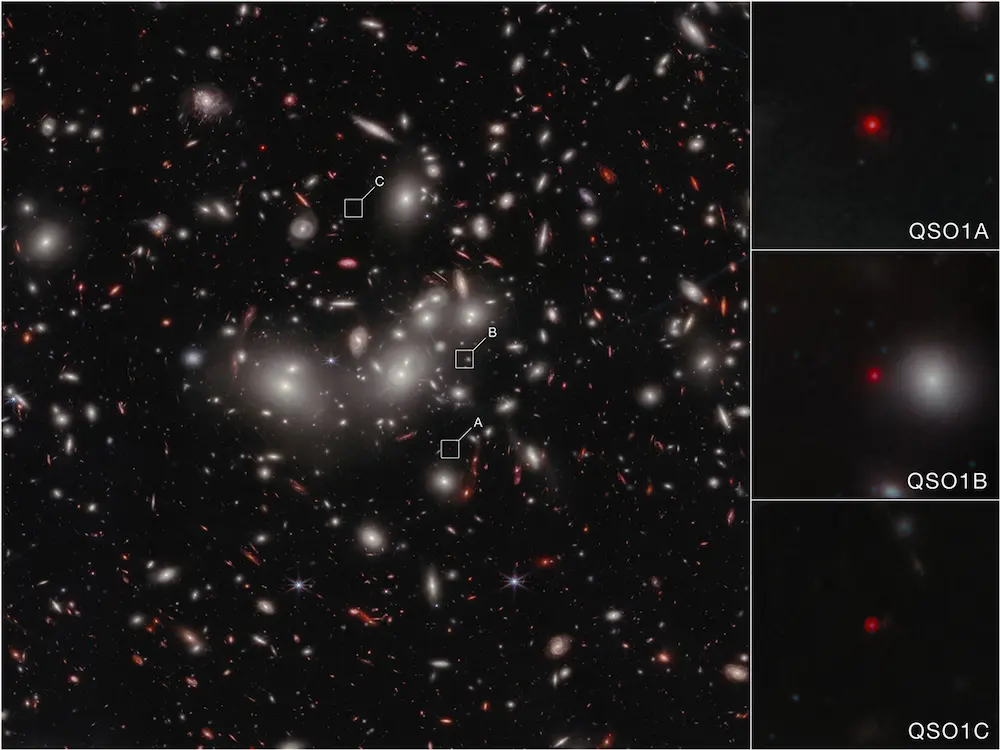
James Webb may have found a black hole older than its galaxy
NASA’s James Webb Space Telescope has delivered one of those results that makes the early universe feel even stranger than expected. Astronomers study…
Read more
Exoplanets are planets that orbit stars beyond our Sun, and in just a few decades they have gone from speculation to one of astronomy’s busiest frontiers. Thousands have now been confirmed in the Milky Way, transforming a once-theoretical question into a catalogued cosmic reality. For anyone searching what an exoplanet is and how astronomers find one, the answer begins with a simple difficulty: these worlds are usually faint, small and overwhelmed by the glare of their parent stars.
That is why most exoplanets are not seen directly. Instead, astronomers detect their effects: a tiny dip in starlight, a slight stellar wobble, a brief brightening caused by gravity, or a minute shift in a star’s position on the sky. The result is a planetary menagerie far stranger than early models predicted, from gas giants hugging their stars to compact systems unlike anything in our own Solar System. Once 51 Pegasi b was discovered orbiting a Sun-like star in 1995, the field changed almost overnight; in 2019, Michel Mayor and Didier Queloz were awarded the Nobel Prize in Physics for that breakthrough.
An exoplanet is simply a planet around another star. The simplicity of the definition hides the observational challenge. Stars shine; planets mostly reflect or absorb that light. Trying to detect an exoplanet can be like noticing a gnat crossing a floodlight from many kilometres away. So astronomers rely on indirect methods that reveal the planet’s presence through the star’s behaviour.
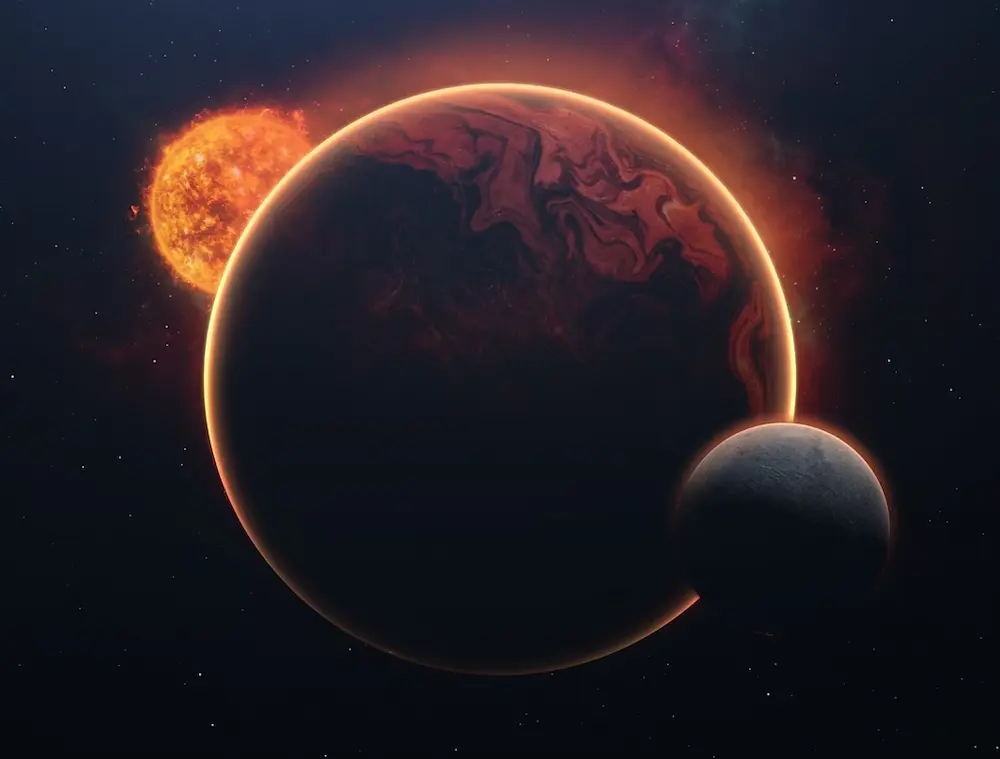
The most productive of these is the transit method. When a planet passes in front of its star as seen from Earth, it blocks a tiny fraction of the starlight. NASA’s Kepler Space Telescope used this strategy to identify nearly 3,000 possible exoplanets, and the method remains central to planet hunting. It is especially powerful because repeated transits reveal an orbit, and the depth of the dip tells astronomers the planet’s size. Better still, if a little starlight filters through the planet’s atmosphere during transit, telescopes can begin probing what that atmosphere contains. That is where the James Webb Space Telescope has become such a compelling tool: not for finding most planets in the first place, but for characterising some of them.
| Method | What astronomers measure | Best at finding | Main limitation |
|---|---|---|---|
| Transit | Tiny dips in starlight | Planets whose orbits line up with Earth | Misses most systems with the wrong geometry |
| Radial velocity | Shifts in the star’s spectrum | Massive planets tugging strongly on stars | Favours larger planets and usually gives minimum mass |
| Direct imaging | Actual light from the planet | Young giant planets far from their stars | Extremely difficult because stars outshine planets |
| Microlensing | Brief brightening from gravity | Distant planets, including possible free-floating ones | Events are usually one-off and hard to revisit |
| Astrometry | Tiny motion of a star on the sky | Potentially broad planetary census with enough precision | Requires extraordinary measurement accuracy |
The other historic workhorse is radial velocity, often described as the Doppler wobble method. A planet does not merely orbit its star; star and planet both orbit a shared centre of mass. As the star moves slightly towards and away from us, its light shifts in wavelength. That shift can reveal the presence of a planet and estimate its mass. This was the technique that uncovered 51 Pegasi b, the first known exoplanet orbiting a solar-type star, and it remains indispensable because it complements transits so well. If transit observations give size and radial velocity gives mass, then astronomers can calculate density and begin to distinguish rocky worlds from puffier, gas-rich ones.
Direct imaging is the method people often imagine first, but it is one of the hardest in practice. It works best for young, large planets orbiting far from their stars, where the glare is less overwhelming and the planets may still be warm and bright. These detections are rarer, but they offer striking views and a different window into planetary systems.
Gravitational microlensing takes advantage of gravity itself. When one star passes in front of another from our viewpoint, the foreground star can magnify the background light. A planet around the nearer star can leave an extra blip in that brightening. The beauty of microlensing is that it can detect planets at great distances and may even be sensitive to worlds that drift freely through space without a host star. The drawback is equally stark: these alignments are usually one-time events.
Then there is astrometry, which tracks a star’s tiny motion across the sky. It promises a powerful route to planet detection if precision is high enough, because it measures the side-to-side tug rather than the in-and-out motion captured by radial velocity. It has long been technically demanding, but future improvements could make it far more influential.
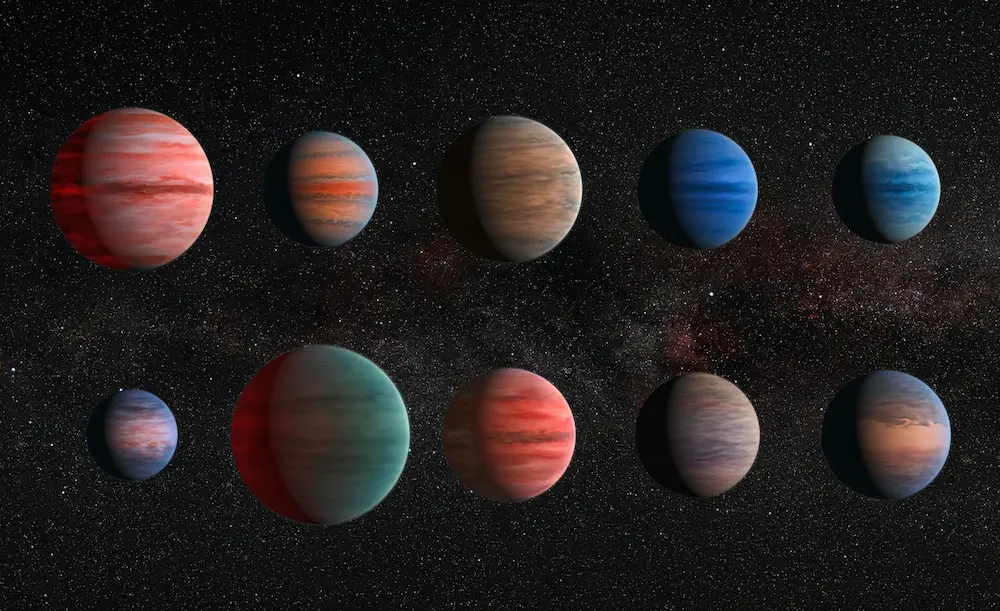
Not all planets are equally easy to find. Big planets close to their stars are overrepresented because they cause deeper transits and stronger stellar wobbles. That helps explain why early discoveries included so many “hot Jupiters”, giant gaseous worlds in scorchingly tight orbits. They were not necessarily the most common planets in the galaxy; they were simply the easiest to catch first. This selection effect matters. A catalogue of discoveries is never a neutral snapshot of nature, especially in a field where the instruments reward certain targets.
Even so, the picture has broadened dramatically. ESA’s Characterising Exoplanet Satellite mission, CHEOPS, has shown how precise follow-up observations can sharpen our understanding of known systems, including unusual planetary arrangements. ESA has also advanced Ariel, which moved from study to implementation with a launch scheduled for 2029, aimed at probing exoplanet atmospheres in far greater depth. Alongside Ariel, ESA’s PLATO is part of the next wave of exoplanet science, while NASA’s Nancy Grace Roman Space Telescope is expected to extend the census, particularly through microlensing.
The field has moved from asking whether planets around other stars exist to asking what they are like, how they formed and, inevitably, whether any might resemble Earth closely enough to host life. What began with a single startling detection around a Sun-like star has become a vast, evolving survey of the Milky Way. And perhaps that is the most thrilling shift of all: exoplanets are no longer rare curiosities at the edge of astronomy, but one of the clearest ways we now explore our place in the cosmos.
AstronomyNASA’s James Webb Space Telescope has delivered one of those results that makes the early universe feel even stranger than expected. Astronomers study…
Read more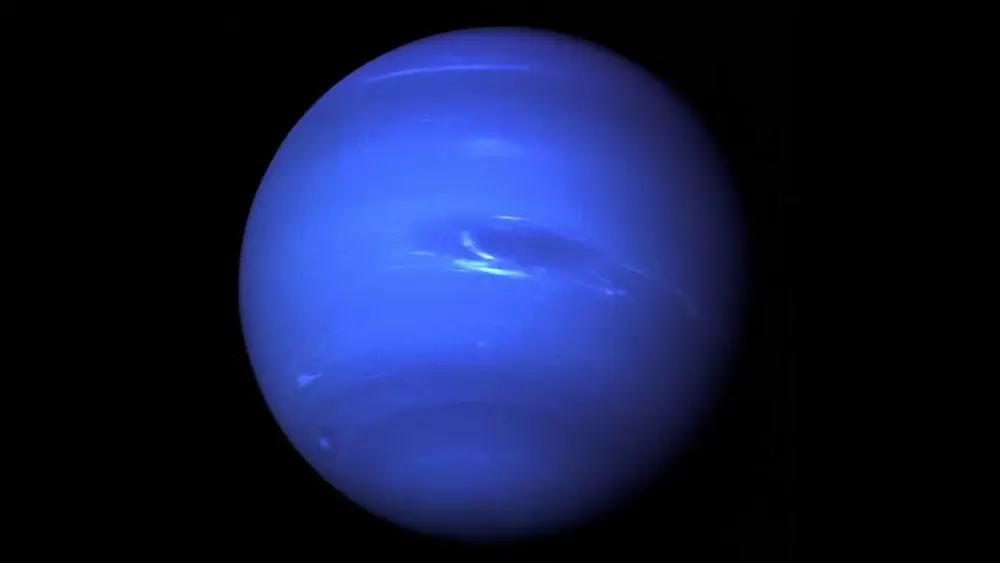 Astronomy
Neptune’s strange moon system may have just become even more fascinating. A new peer-reviewed study published on 20 May in Science Advances argues tha…
Read more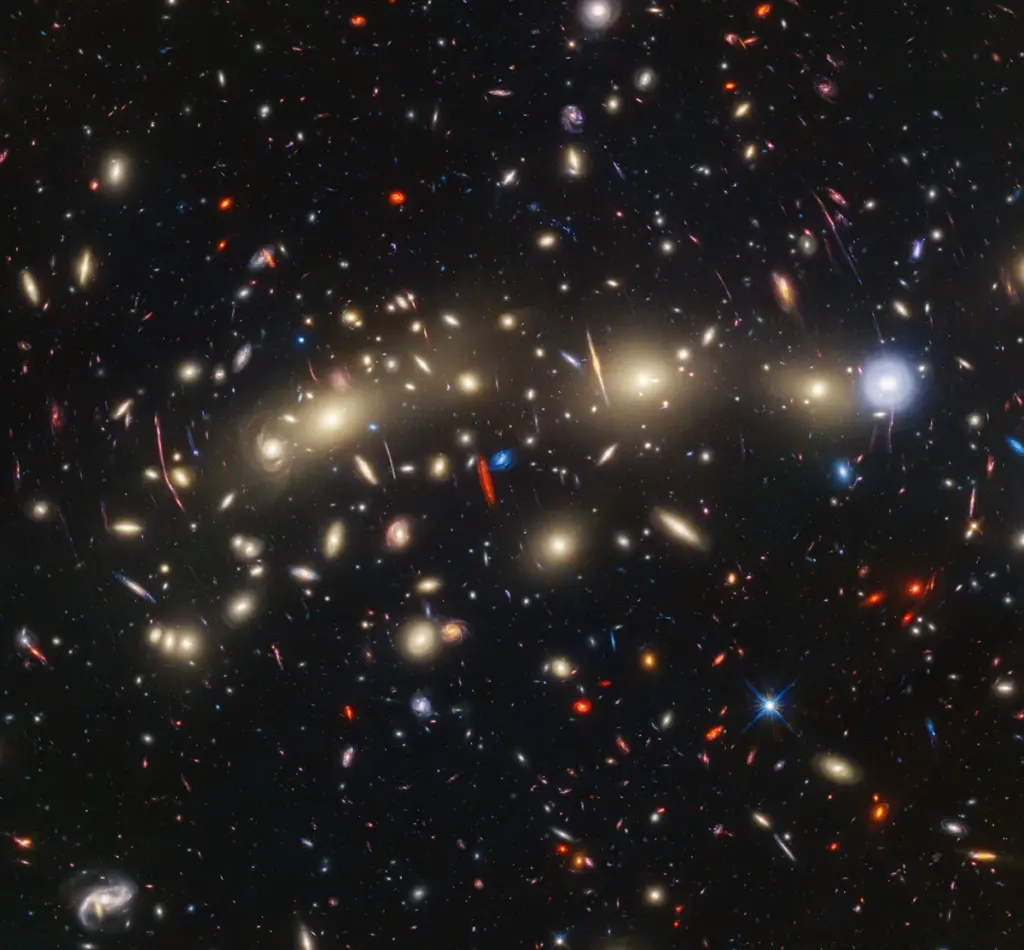 Astronomy
The search for the universe’s first stars has always been one of astronomy’s most tantalising pursuits. Now the James Webb Space Telescope has pushed …
Read more