 Missions
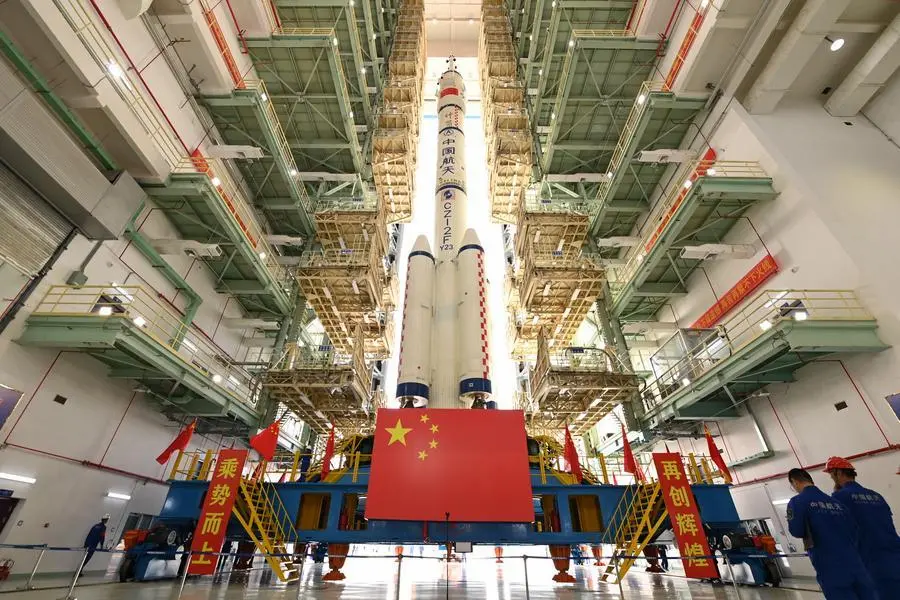
Shenzhou-23 marks China’s first planned year in orbit
China has launched the Shenzhou-23 crewed mission to the Tiangong space station, and the headline detail is hard to miss: one of the three astronauts …
Read more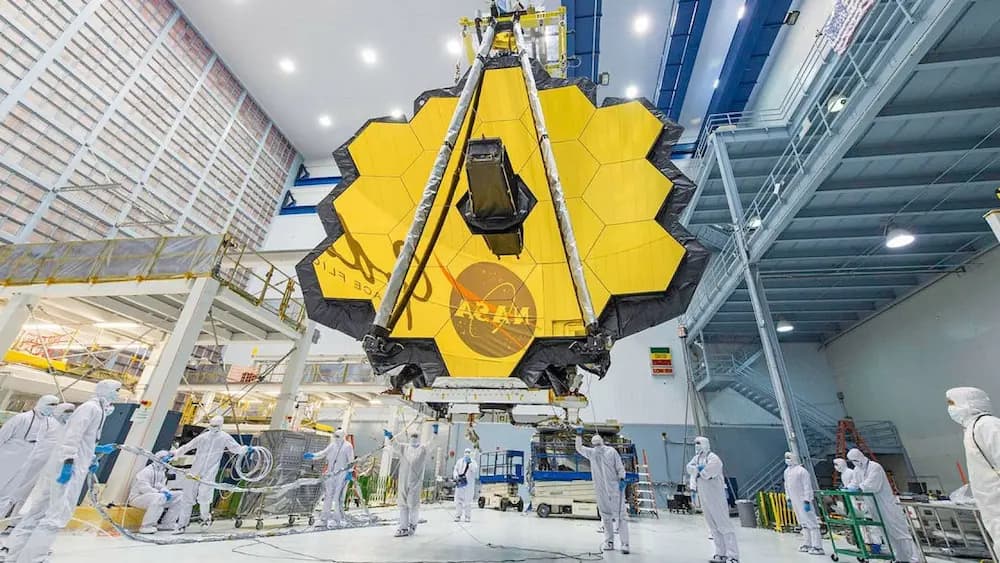
A year into full science operations, the James Webb Space Telescope had already begun to feel less like a new observatory and more like a change in perspective. Its anniversary image of the Rho Ophiuchi star-forming region captured that shift beautifully: dense curtains of dust, newborn stars and sculpted gas glowing in infrared, a reminder that some of the Universe’s most important scenes unfold behind veils that visible-light telescopes cannot easily penetrate.
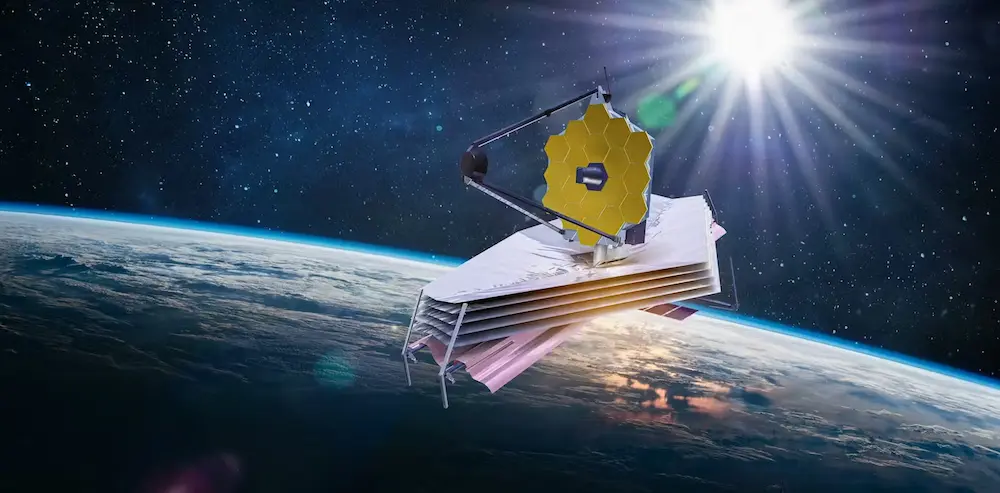
That is exactly where Webb excels. Launched in December 2021 and revealed to the world through its first images in July 2022, the NASA-led mission, developed with the European Space Agency and the Canadian Space Agency, was built to observe the cosmos in infrared light with a 6.5-metre mirror. From its orbit around the Sun–Earth L2 point, Webb has a cold, stable view of space, allowing it to detect extraordinarily faint heat signatures and ancient light. Why does that matter so much? Because infrared can slip through cosmic dust, and because the expansion of the Universe stretches very old light to longer, redder wavelengths — a process known as redshift.
In just one year, Webb pushed on nearly every major frontier in astronomy at once: the first galaxies, the birth of stars and planets, the chemistry of alien atmospheres and even the workings of our own Solar System.
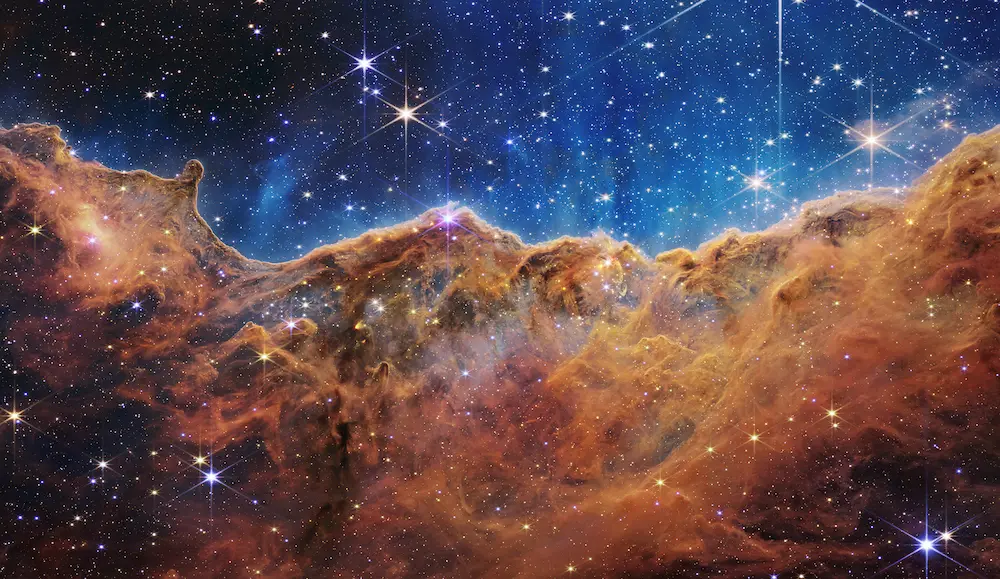
Webb’s design is the key to its scientific reach. Infrared observations allow astronomers to study regions that look dark or obscured in visible light, from stellar nurseries to the earliest galaxies. That capability has turned familiar celestial landmarks into fresh territory. In nebulae such as the Cosmic Cliffs and the Pillars of Creation, Webb uncovered embedded protostars, outflows and jets that had been hidden inside dusty clouds. These are not merely prettier portraits of famous objects; they expose active star formation in remarkable detail, showing how turbulence, radiation and gravity shape the earliest phases of stellar life.
Webb also reads light in a particularly powerful way through spectroscopy, which means splitting light into its component wavelengths to identify chemical fingerprints. That technique has transformed exoplanet science. Among the mission’s headline results was the atmospheric analysis of WASP-39b, where Webb identified carbon dioxide and water, as well as photochemical byproducts that point to chemistry driven by starlight. The leap here is subtle but profound: astronomers are moving from detecting exoplanets to characterising them.
| Webb fact | What it means |
|---|---|
| 6.5-metre primary mirror | Collects faint light from distant and cool objects |
| Infrared observatory | Sees through dust and detects redshifted ancient light |
| Orbit at Sun–Earth L2 | Provides a stable, cold environment for sensitive observations |
| First images released in July 2022 | Marked the start of full scientific discovery |
That same precision has reached rocky worlds too. Webb used its Mid-Infrared Instrument to measure heat coming directly from TRAPPIST-1 b, the innermost planet in a seven-planet system 40 light-years away. The team found a dayside temperature of about 500 kelvins and results consistent with a bare rocky surface lacking a substantial atmosphere. It was the first detection of emitted light from an exoplanet as small and comparatively cool as the rocky planets in our own Solar System — a technical milestone as much as a planetary one.
If Webb’s exoplanet results showed precision, its deep views of the early Universe showed reach. In deep-field observations, astronomers found galaxies at astonishing distances and, more intriguingly, signs that some early cosmic structures appeared brighter or more developed than many had expected. That does not overturn cosmology, but it does sharpen the questions. How quickly did the first galaxies assemble? How soon did stars enrich their surroundings? Webb has made the young Universe look busy.
Closer to home, the telescope has been just as revealing. Detailed observations of Jupiter and Saturn highlighted atmospheric structure, rings and auroral features with an infrared clarity unavailable from most previous space-based views. Webb also detected water associated with a main-belt comet, an especially tantalising result because such objects orbit in a region long studied for clues to how water may have been distributed in the early Solar System. Elsewhere, its observations have added to the wider hunt for signs that ocean worlds may harbour the chemical ingredients and conditions that make them compelling targets for future study.
Seen together, these results show the unusual breadth of Webb’s science. Some observatories become famous for one speciality. Webb is doing something rarer: building a connected picture of cosmic history, from early galaxy assembly to planetary atmospheres and the dusty environments where stars and worlds are still forming.
The first year was not only about discoveries but about confidence. Webb proved that its engineering works at the level astronomers hoped for when the observatory was still only a daring design. Its position at L2, its enormous sunshield, and its suite of instruments have given researchers an observatory stable enough for exquisitely subtle measurements — including brightness changes of less than a tenth of a percent in exoplanet systems.
The international character of the mission remains central to that success. NASA leads the programme, with major contributions from the European Space Agency and the Canadian Space Agency, and instruments built through deep collaboration across agencies and institutes. Webb’s Mid-Infrared Instrument, for example, reflects that partnership directly, combining NASA and ESA contributions with European and US institutional expertise.
What comes next is, in some ways, even more exciting than the first rush of results. Webb is operating stably, new cycles of observations are broadening the science agenda, and astronomers are shifting from proof-of-concept measurements to more ambitious campaigns. A full phase curve of TRAPPIST-1 b, for instance, could map how temperature changes across the planet and test the atmosphere question more firmly.
Webb does not replace the Hubble Space Telescope so much as extend the story into wavelengths and regimes Hubble cannot reach. Together, and eventually alongside upcoming missions, it is giving astronomy something close to a layered vision of the cosmos. One year in, the message was already unmistakable: the frontier has moved, and Webb is one of the reasons why.
MissionsChina has launched the Shenzhou-23 crewed mission to the Tiangong space station, and the headline detail is hard to miss: one of the three astronauts …
Read more Missions
What does daily life look like when four astronauts leave low Earth orbit and head around the Moon? With NASA’s Artemis II now completed after launchi…
Read more Missions
NASA has now offered its clearest public sketch yet of Artemis III, and the headline is a major shift: this mission is currently being shaped as a cre…
Read more