 Space Agencies
What Is ESA? Europe’s Space Agency Explained
The European Space Agency is Europe’s gateway to space: an intergovernmental organisation created in 1975 to develop a shared space programme for peac…
Read more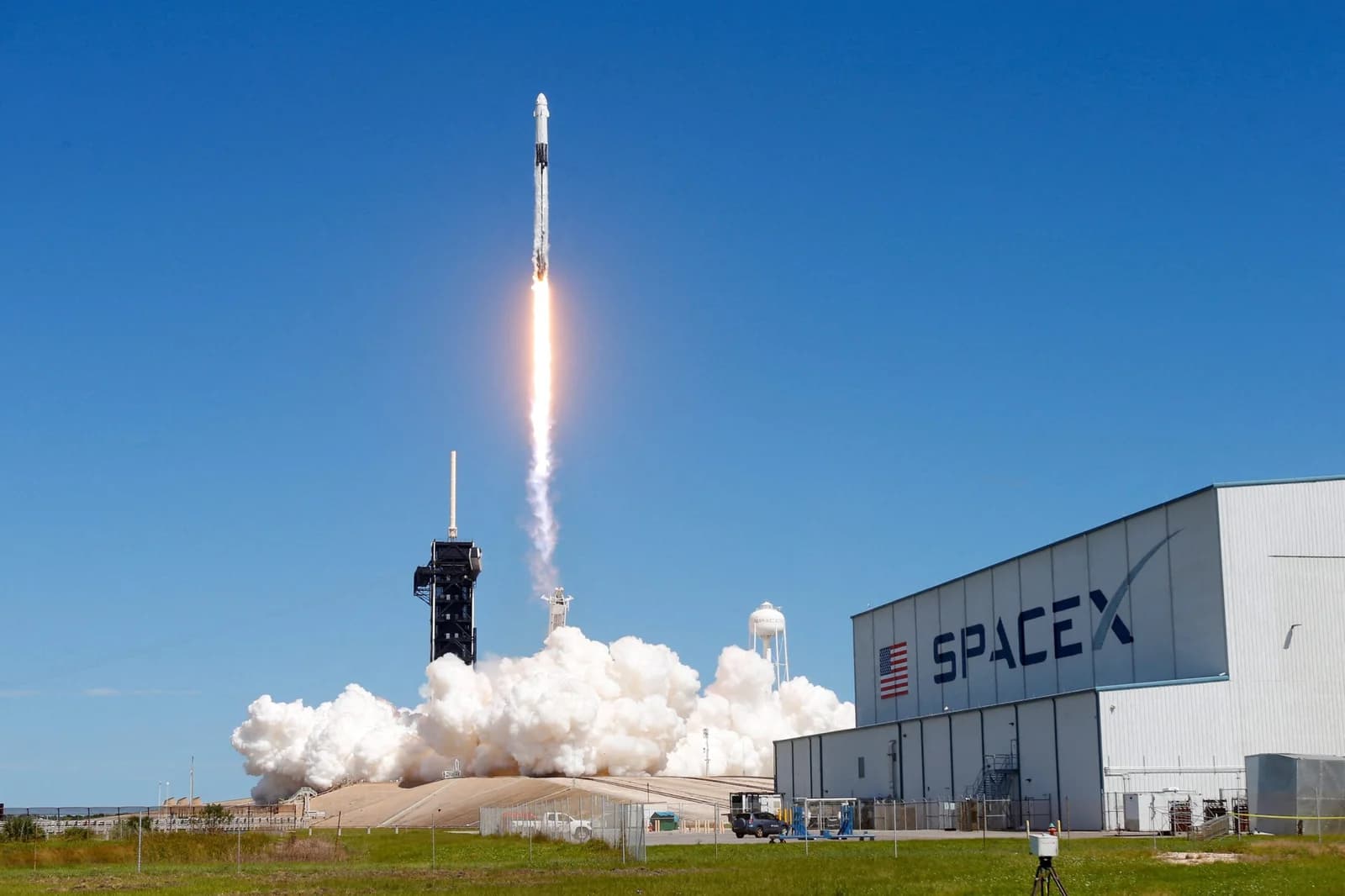
Search for “NASA vs SpaceX” and you will quickly run into a false choice. These are not rival versions of the same organisation. They exist for different reasons, answer to different systems, and increasingly depend on one another. If you want the clearest way to understand the modern space sector, start there.
NASA, the National Aeronautics and Space Administration, opened on 1 October 1958. It is the United States’ civil space and aeronautics agency, funded by taxpayers and tasked with exploring air and space, advancing science and technology, and inspiring the public through discovery. Its work ranges from Earth science and climate research to the International Space Station, planetary missions, astrophysics, aeronautics and the Artemis campaign, which aims to establish a sustainable human presence on the Moon this decade.
SpaceX, founded in 2002, is a private company. Its business is not to act as a national science agency, but to build and operate launch systems, spacecraft and other commercial space services. On its own website, SpaceX describes itself as a launch provider developing reusable rockets, advancing human spaceflight, and operating Starlink, its satellite internet network. That difference in purpose changes everything: NASA sets public missions; SpaceX sells capabilities.
So which matters more? The more accurate question is: what happens when a government agency with long-term exploration goals works with a company built for speed, iteration and commercial scale?
The best example is NASA’s Commercial Crew Program. NASA says the programme is designed to provide safe, reliable and cost-effective transportation to and from the International Space Station from the United States through partnerships with American private industry. That wording is revealing. NASA is not stepping away from human spaceflight; it is changing how some of the transport is bought.
In practice, NASA purchases services from companies rather than owning every part of the vehicle system itself. The editorial brief describes these arrangements as fixed-price, milestone-based contracts. In plain language, that means NASA pays for agreed results as companies hit defined development targets, instead of simply covering all costs as they arise. It is a model intended to encourage efficiency while keeping NASA’s requirements firmly in place.

That is why Crew Dragon missions matter so much. SpaceX provides the spacecraft and launch service, while NASA certifies vehicles for astronaut safety and sets the standards for missions carrying its crews. As of May 2026, NASA’s Commercial Crew Program listed NASA’s SpaceX Crew-12 as the current featured mission and had already shared crew assignments for NASA’s SpaceX Crew-13. The partnership is no longer experimental; it is part of the routine rhythm of station operations.
| Organisation | What it is | Primary role in human spaceflight | Examples in sources |
|---|---|---|---|
| NASA | US civil space and aeronautics agency | Sets mission goals, requirements and crew safety standards | Artemis, International Space Station, Earth science, Webb, Hubble |
| SpaceX | Private aerospace company | Provides launch and spacecraft services under contract | Crew Dragon, Falcon launches, Starship, Starlink |
| FAA | US government regulator | Licenses commercial launches and reentries | FAA commercial space role referenced via FAA space portal |
This same logic extends beyond low-Earth orbit. The editorial brief notes that SpaceX’s Starship was selected for the Artemis Human Landing System. That places SpaceX inside NASA’s lunar architecture, but not above it. NASA remains the agency defining the exploration objective: return humans to the Moon, learn how to operate there sustainably, and use that experience to support future Mars exploration.
Another source of confusion is oversight. NASA and SpaceX do not regulate each other in a blanket sense because they are not peers under one chain of command. Their responsibilities intersect, but they are distinct.
For missions involving NASA astronauts, NASA sets mission requirements and crew safety standards. Under Commercial Crew, for example, the agency certifies vehicles for astronaut transport. That is a crucial point. A private spacecraft carrying NASA crew is not simply flying on company say-so; it must satisfy NASA’s safety and mission needs.
At the same time, the Federal Aviation Administration, or FAA, plays a different role. According to the editorial brief and the FAA’s space portal, the FAA is the body that licenses commercial launches and reentries. In other words, NASA defines what it needs for its missions, while the FAA handles the legal licensing framework for commercial flight operations. One focuses on programme and mission assurance, the other on regulatory authorisation.
This distinction matters because it shows how commercial space has matured. There is now an ecosystem: government agency, private provider, and federal regulator. That is a far cry from the early Space Age model in which one national agency did nearly everything itself.
The modern arrangement works because each side brings something the other does not. NASA operates across a breathtakingly wide frontier: Earth science, climate and our home planet, the Sun, the Solar System, the larger universe, advanced technology, aeronautics research and the International Space Station. It also pursues missions whose value is scientific, strategic or societal rather than directly commercial. Telescopes, planetary probes and long-horizon exploration campaigns do not always fit neatly into a market model, and that is precisely why a public agency exists.
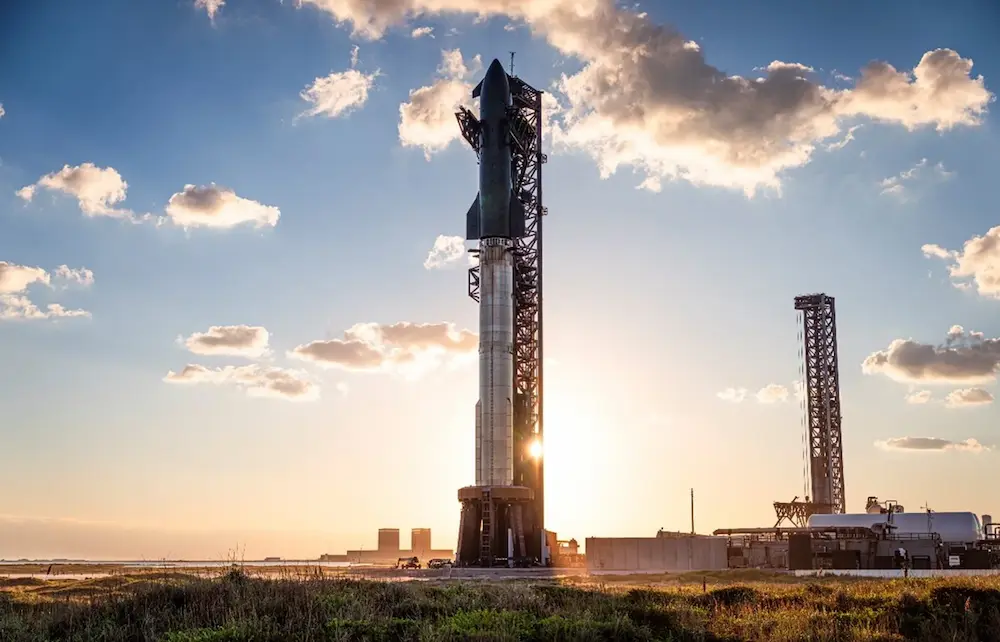
SpaceX, by contrast, is built around execution at commercial pace. Its site highlights reusable rockets, launch services, human spaceflight and Starlink. Reusability and high launch cadence can change the economics of access to space, not by replacing public exploration goals, but by giving those goals more transport options. That can lower costs and speed up timelines, especially where NASA is buying a service rather than designing every spacecraft from scratch.
Seen in that light, the relationship is less a contest than a division of labour. NASA still tackles national science, public-good research and exploration strategy. SpaceX pushes launch operations, spacecraft services and commercial infrastructure. The Moon and Mars ambitions that loom so large in both organisations’ language may depend on exactly this combination: public purpose paired with private capability.
The myth of “NASA versus SpaceX” survives because rivalry is easy to understand. Reality is more interesting. One organisation reaches for discoveries that belong to everyone; the other builds machines and services that can help get us there more often. In the history of spaceflight, that may prove to be one of the most consequential partnerships of all.
Space AgenciesThe European Space Agency is Europe’s gateway to space: an intergovernmental organisation created in 1975 to develop a shared space programme for peac…
Read more Space Agencies
Becoming an astronaut remains one of the most demanding career paths on Earth, and the basic idea has not changed in the Artemis era: space agencies s…
Read more Space Agencies
How does NASA go from a bold concept on paper to a spacecraft on the pad? Behind the iconic launches and deep-space discoveries, the National Aeronaut…
Read more