 Technology
Asteroid Mining Today: Hype vs Reality
Asteroid mining has long been sold as a cosmic gold rush, with visions of platinum-rich rocks transforming Earth’s economy overnight. The reality emer…
Read more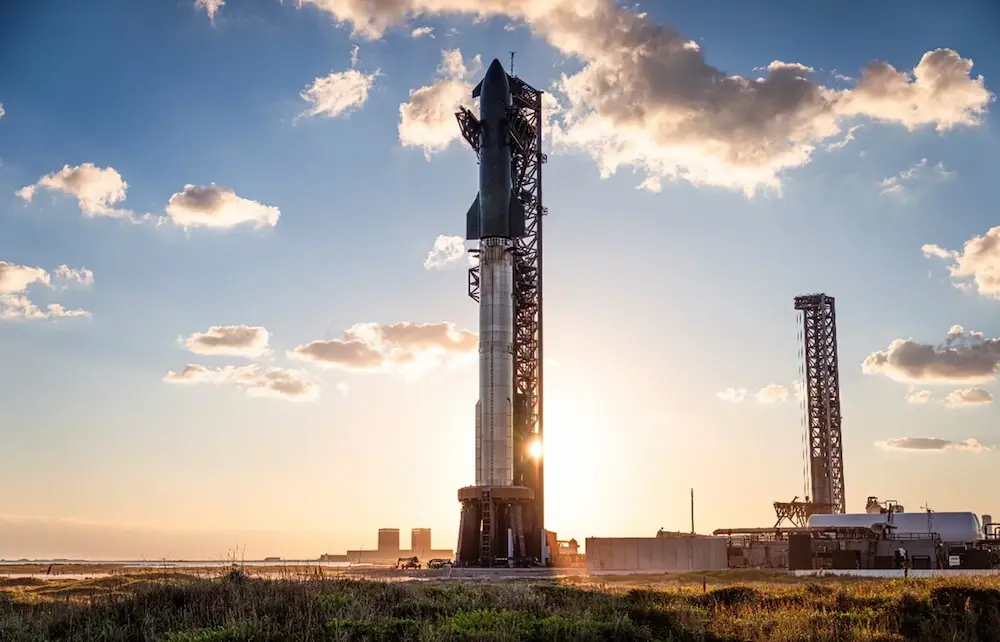
SpaceX’s Starship has changed the conversation around heavy-lift rockets simply by existing at full scale. On raw numbers, it now stands above the Saturn V in several headline categories: it is taller, vastly more powerful at liftoff, and designed to carry more mass to low Earth orbit while being fully reusable. But anyone searching for a straight answer on which rocket is truly “greater” needs more than superlatives. The real story sits in the gap between capability on paper and capability proven in flight.
That distinction matters because these two launch systems were built for different eras. Saturn V was an expendable machine created to achieve a specific geopolitical and engineering goal: landing humans on the Moon. Starship, by contrast, is intended as a transportation system for Earth orbit, the Moon, Mars and beyond, with reusability at the centre of the design. So yes, Starship surpasses Saturn V in brute force. But Saturn V still holds something harder to claim: a completed human lunar record.
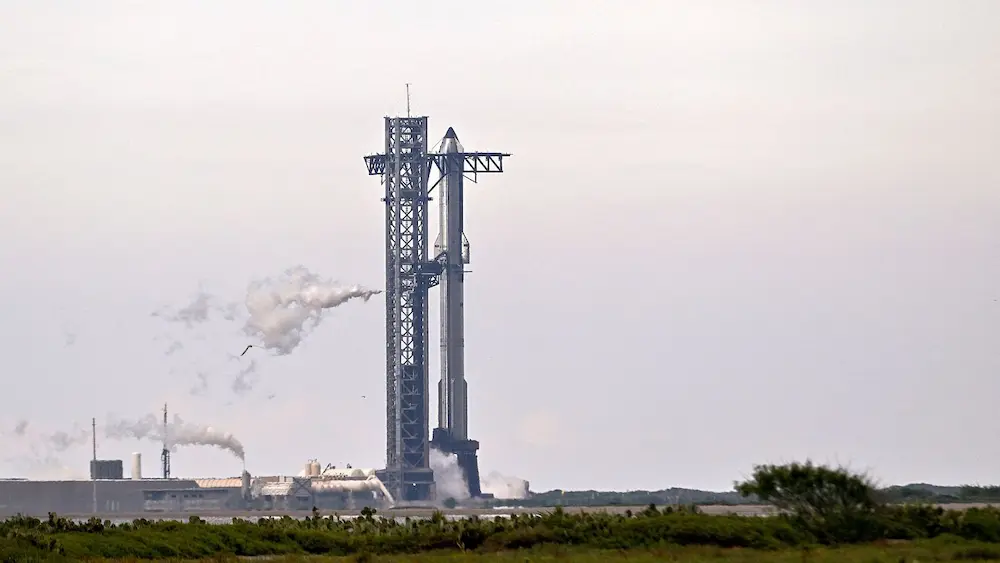
By SpaceX’s published figures, the full Starship system stands 123 metres tall, with a 9-metre diameter and a fully reusable payload capacity of 100 to 150 metric tonnes. Its first stage, Super Heavy, is powered by 33 Raptor engines, while the upper-stage spacecraft uses six engines: three sea-level Raptors and three Raptor Vacuum engines. SpaceX describes it as the most powerful launch vehicle ever developed, and that is the key headline: in raw launch power, Saturn V has been overtaken.
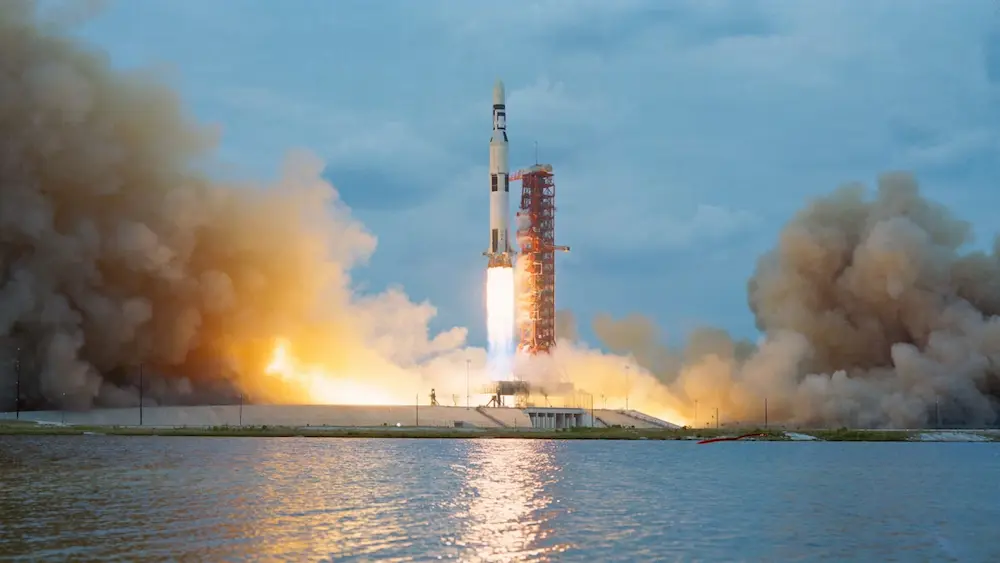
The editorial comparison point is striking. Saturn V stood around 110.6 metres tall and produced roughly 34 meganewtons of thrust at liftoff from five F-1 engines. Starship’s liftoff thrust is commonly cited in the 74 to 76 meganewton range, more than double Saturn V’s. Put simply, if Saturn V was the giant that opened the road to the Moon, Starship is a giant scaled for a much busier Solar System.
| Rocket | Height | Liftoff thrust | Main first-stage engines | Payload to LEO |
|---|---|---|---|---|
| SpaceX Starship | 123 m | ~74–76 MN | 33 Raptor | 100–150 t fully reusable |
| Saturn V | 110.6 m | ~34 MN | 5 F-1 | ~118 t |
Payload is where the comparison gets more nuanced. Saturn V demonstrated about 118 tonnes to low Earth orbit and roughly 43 to 50 tonnes to translunar injection. Starship’s published low-Earth-orbit figure is higher, but missions beyond Earth orbit depend on a major architectural difference: on-orbit refilling. SpaceX says tanker versions of Starship will refill a spacecraft in low Earth orbit before it departs for Mars, enabling several hundred tonnes of cargo to be transported onward. That is an extraordinary concept, although it remains different from Saturn V’s already-demonstrated Moon-bound performance.
The deeper contrast lies under the skin. Saturn V relied on a classic Apollo-era combination of RP-1 and liquid oxygen in its first stage and liquid hydrogen and liquid oxygen in its upper stages. That architecture delivered enormous performance, but not reusability. Every Saturn V launch consumed an entire rocket.
Starship uses a different philosophy. Its Raptor engines burn liquid methane and liquid oxygen, and SpaceX describes them as reusable staged-combustion engines. Methane is attractive because it supports cleaner engine operation than kerosene-based systems, while a fully reusable vehicle demands hardware that can fly, return, and fly again with as little refurbishment as possible. That is not just an engineering preference; it is the economic foundation of Starship.
And economics may be the most radical part of the whole project. SpaceX presents Starship as a launch system designed for rapid turnaround, with both Starship and Super Heavy returning to the launch site to be caught and prepared for another mission. If that works at scale, the effect would go far beyond a single record-breaking launch. Cost per kilogram could fall, launch cadence could rise, and missions that once required rare national efforts could become operationally routine. Isn’t that the real threshold every heavy-lift rocket has been trying to cross since the dawn of the Space Age?
This is where Saturn V retains its authority. It flew 13 times, launched astronauts, and supported the missions that carried humans to the lunar surface. Its numbers were not projections or target performance: they were part of a finished programme that worked in the most unforgiving environment imaginable.
Starship, on the other hand, belongs to a very different model of development. SpaceX is building it through an iterative test campaign at Starbase, where the company develops, manufactures, tests and launches the system. The official vision is expansive, ranging from satellite delivery to Moon missions under NASA’s Artemis missions, cargo flights to the lunar surface beginning in 2028, and Mars cargo missions from 2030. SpaceX also says Starship could eventually carry up to 100 people on long-duration interplanetary flights.
Those ambitions are immense, but they are still ambitions until repeatedly demonstrated. So the fairest verdict is not that Starship has “replaced” Saturn V in every sense. It has surpassed Apollo’s giant in raw power and projected reusable capacity, and it may redefine deep-space logistics if orbital refuelling and rapid reuse mature. Yet Saturn V remains the benchmark for proven beyond-Earth-orbit achievement. One rocket changed history; the other is trying to change the scale at which history can be made.
TechnologyAsteroid mining has long been sold as a cosmic gold rush, with visions of platinum-rich rocks transforming Earth’s economy overnight. The reality emer…
Read more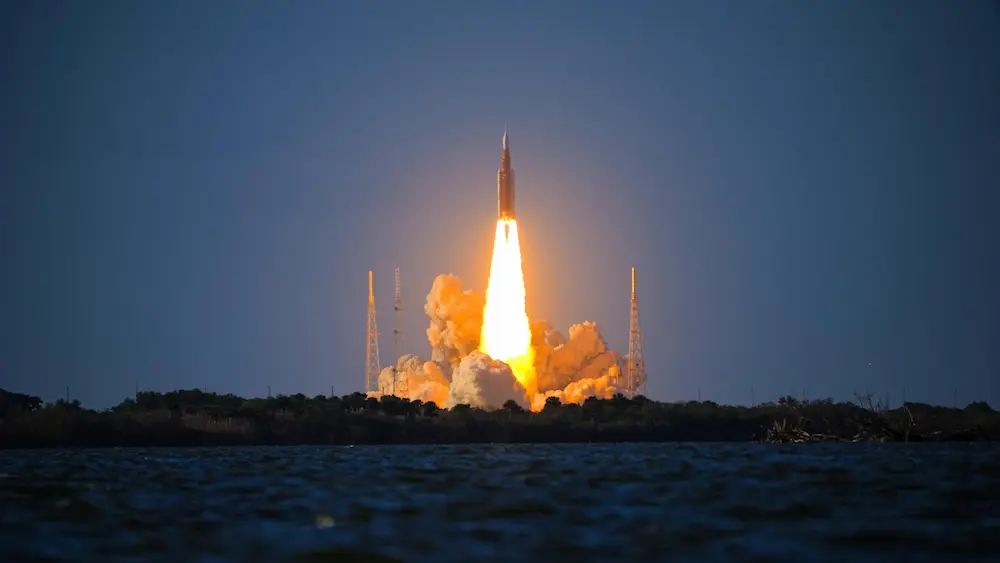 Technology
What is the most powerful rocket ever built? The answer depends on what, exactly, you mean by power. If you are talking about raw liftoff thrust — the…
Read more