 Explainers
What Is the Milky Way Galaxy? Everything You Need to Know
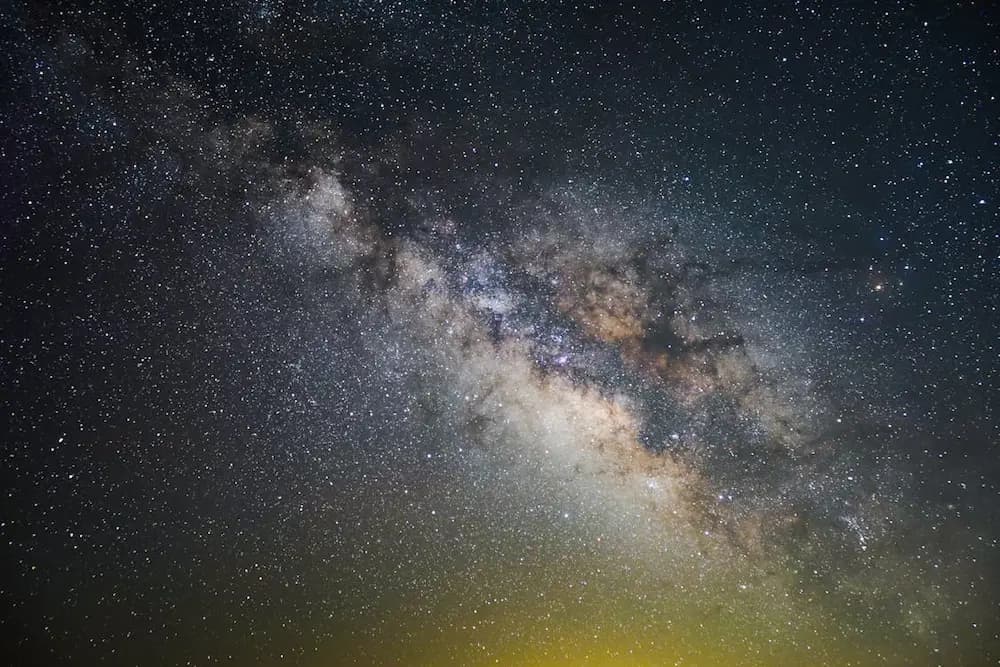
We live inside a galaxy so large that no one can step back and photograph it in a single frame. That is the central challenge of Milky Way astronomy: …
Read more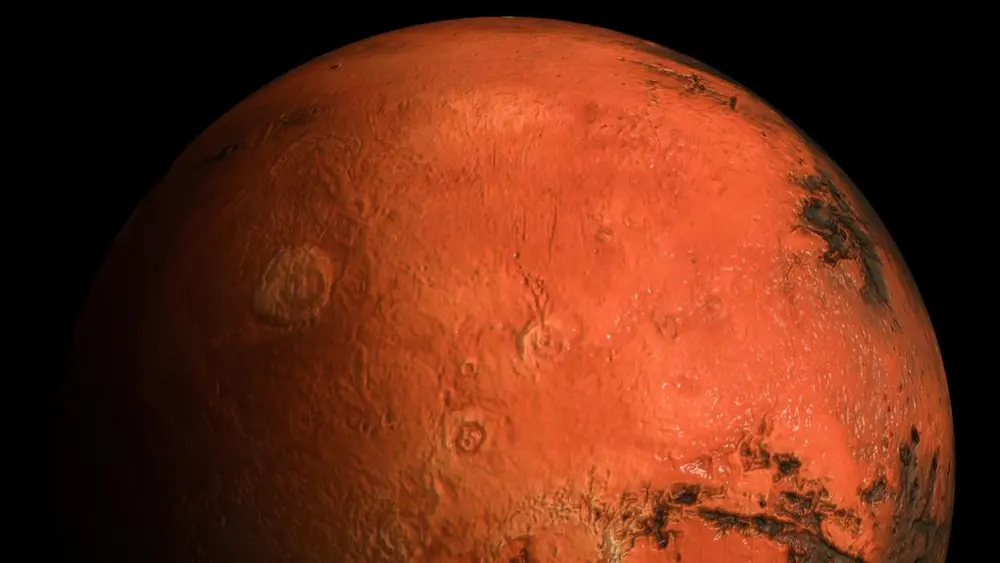
How long does it take to get to Mars? The honest answer is wonderfully unsatisfying: it depends. Not just on how far Mars is from Earth, but on when you leave, how you travel and how much energy you can afford to spend getting there.
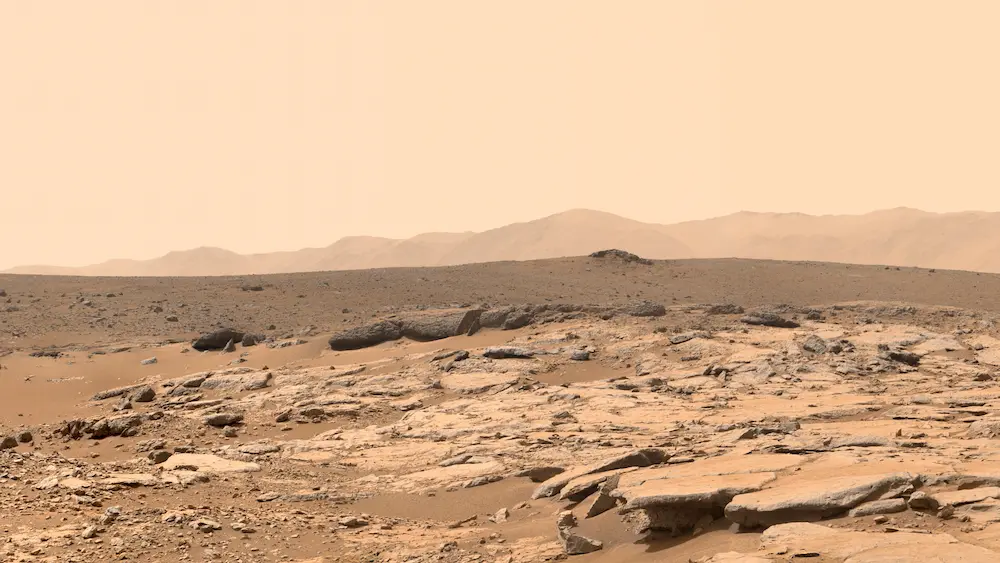
That is why there is no single, universal Mars journey time. Robotic missions have typically taken somewhere between about six and nine months, with NASA noting that the interplanetary cruise phase lasts about 200 days in many missions. A good real-world example is NASA’s Perseverance rover, which launched on 30 July 2020 and landed in Jezero Crater on 18 February 2021 after a seven-month trip. NASA’s Curiosity rover took longer, around 8.5 months, showing that even missions to the same planet do not follow identical clocks.
The reason is simple in principle and fiendish in practice. Earth and Mars are both moving around the Sun, so spacecraft do not fly in a straight line to where Mars is when they launch. They have to aim for where Mars will be on arrival. It is a bit like throwing a dart at a moving target from a moving vehicle. Or, more realistically, trying to board a train by running to the point where it will reach the platform, not where it is now.
The distance between Earth and Mars swings dramatically because both worlds follow their own orbits. In theory, they can come as close as 54.6 million kilometres, while at their most widely separated they can be about 401 million kilometres apart. The average distance is about 225 million kilometres. Yet those numbers, striking as they are, do not tell the full story. Travel time is shaped at least as much by trajectory and fuel budget as by raw distance.
Mission planners wait for launch windows when Earth and Mars line up favourably. According to NASA and the European Space Agency’s mission analysis framework described in the source material, these opportunities come roughly every 25 to 26 months. Launch at the right moment and the trip demands less energy; miss it, and the route becomes much more expensive in propellant.
The classic baseline is the Hohmann transfer, an energy-efficient path that sends a spacecraft on a long half-ellipse around the Sun, starting near Earth’s orbit and meeting Mars near its own. In plain language, it is the cosmic equivalent of taking the gentlest motorway slip road instead of flooring it across country. That usually puts Mars travel time in the broad range of roughly six to nine months, though some transfers stretch into the 7 to 11 month range when lower-energy options are chosen.
| Mars travel factor | Figure from sources | Why it matters |
|---|---|---|
| Closest theoretical Earth-Mars distance | 54.6 million km | Shows how near the planets can get, but not a typical mission path |
| Average Earth-Mars distance | 225 million km | Useful scale, though real trajectories curve around the Sun |
| Farthest separation | 401 million km | Explains why Mars is not equally reachable at all times |
| Launch window cycle | About 26 months | The best chances for energy-efficient transfers |
| Typical cruise phase | About 200 days | A practical benchmark for many robotic missions |
Faster is possible, but speed comes at a price. As ESA mission analyst Michael Khan explained in the sourced material, interplanetary travel is fundamentally about managing energy. Push harder at departure and you can shorten the cruise. But if your spacecraft is meant to orbit Mars or land there, it cannot simply scream past the planet. It must arrive slowly enough to be captured into orbit or descend through the atmosphere under control.
That is why flyby missions can be quicker, while orbiters and landers are often slower. They need braking. For orbiters, that means propellant for Mars orbit insertion. For some missions, it also means aerobraking, using the upper Martian atmosphere as a drag brake to gradually shrink and reshape the orbit. It is an elegant trick: less like slamming on the brakes, more like skimming the air to bleed off speed over time.
For landers and rovers, the final challenge is even more dramatic. NASA describes Entry, Descent, and Landing, or EDL, as the shortest and most intense phase of a rover mission. In Perseverance’s case, the spacecraft went from blazing into the Martian atmosphere to sitting motionless on the surface in about seven minutes. What good is a fast cruise if you arrive too hot and too fast to survive?
For astronauts, these trade-offs become far more serious than a mission design puzzle. A slower trip may save fuel, but it also means more time exposed to radiation and more months living in microgravity. That is one reason Mars mission planners care so much about shaving time off the journey without making the arrival impossibly harsh.
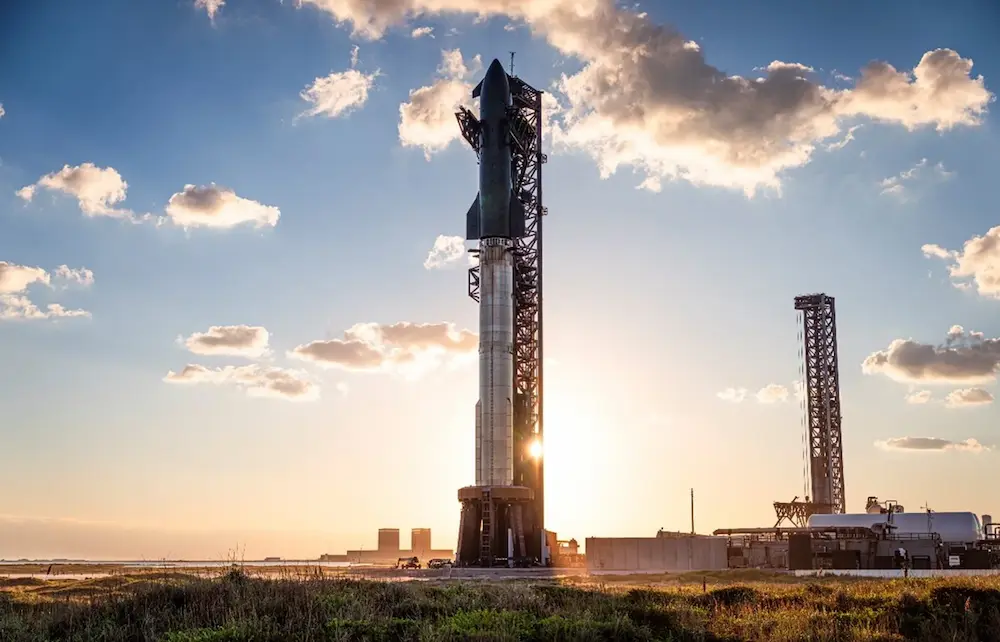
Some advances are already part of the toolkit. Aerobraking helps orbiters reduce propellant needs after arrival, and increasingly capable propulsion systems could cut cruise times. The source material points to future options such as electric propulsion and more ambitious concepts like nuclear thermal propulsion as ways to trim months from crewed Mars journeys.
There are also far more radical ideas on the horizon. Space.com’s source notes that photon propulsion concepts have been proposed that, in theory, could send lightweight robotic spacecraft to Mars in only a few days. That remains far from operational reality, but it shows how dramatically travel times could change if propulsion technology leaps forward.
For now, though, the most realistic answer remains beautifully grounded in orbital mechanics. Reaching Mars is less about charging straight at the Red Planet and more about joining a carefully timed celestial dance. With current methods, a well-planned mission usually needs the better part of a year. In the future, that may shrink. But even then, Mars will still demand the same thing it always has: patience, precision and respect for the physics of the Solar System.
ExplainersWe live inside a galaxy so large that no one can step back and photograph it in a single frame. That is the central challenge of Milky Way astronomy: …
Read more Explainers
Earth’s spin feels so constant that it is easy to treat it as background scenery rather than one of the defining facts of our planet. Yet the ground b…
Read more Explainers
Astronauts aboard the International Space Station seem to drift effortlessly, as if gravity has somehow been switched off. It is one of the most persi…
Read more