 Technology
Asteroid Mining Today: Hype vs Reality
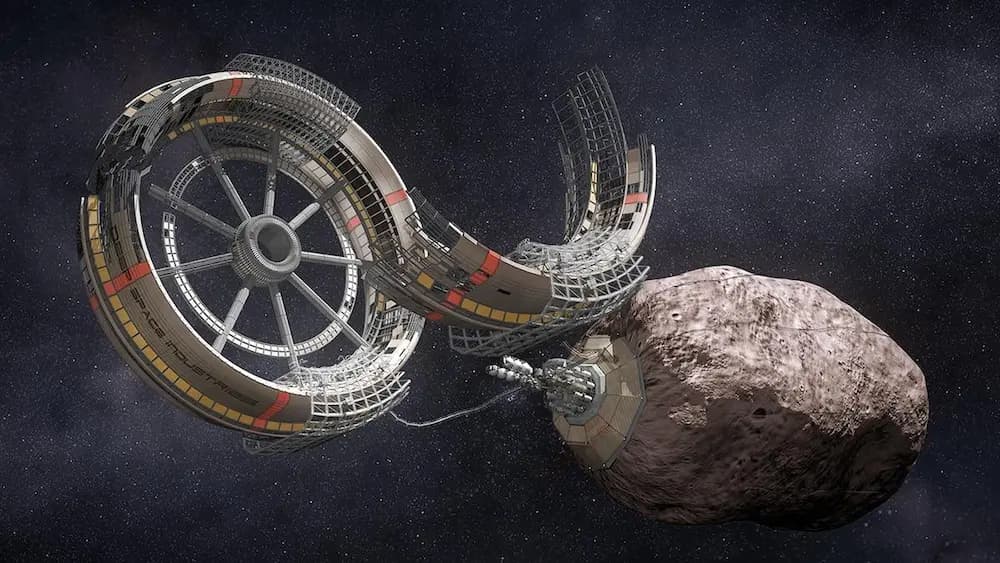
Asteroid mining has long been sold as a cosmic gold rush, with visions of platinum-rich rocks transforming Earth’s economy overnight. The reality emer…
Read more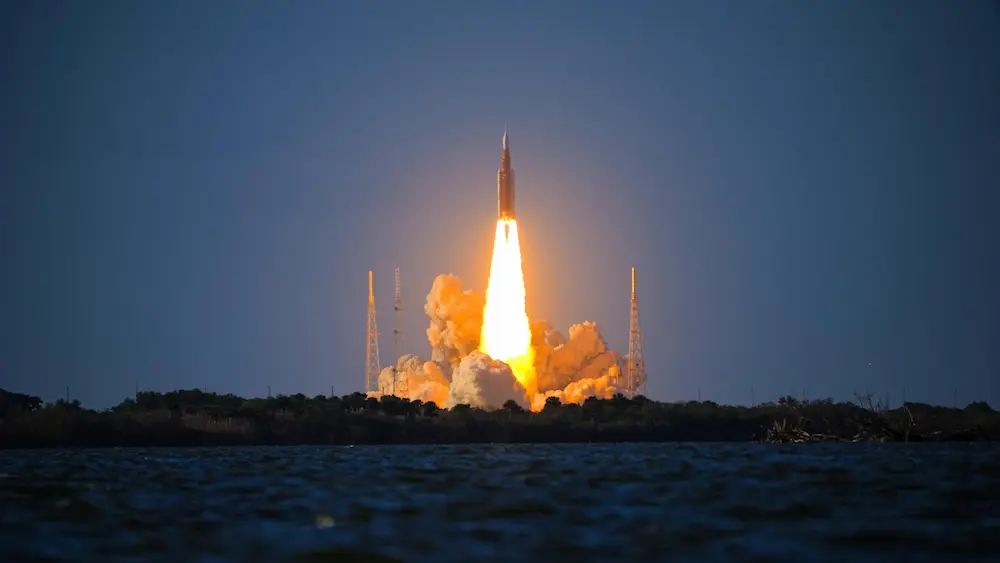
What is the most powerful rocket ever built? The answer depends on what, exactly, you mean by power. If you are talking about raw liftoff thrust — the force that shoves a launch vehicle off the pad against Earth’s gravity — then SpaceX’s Starship and Super Heavy sits at the top with roughly 16.7 million pounds of thrust. By that measure, it has moved beyond the great heavy-lift giants of the past. But if you are asking which super-heavy rocket is actually operational today for deep-space human exploration, NASA’s Space Launch System currently holds that distinction.
That distinction matters, because rocket rankings shift depending on the yardstick. Liftoff thrust is not the same thing as payload capacity, and neither tells the whole story about what a vehicle can do beyond low-Earth orbit. Saturn V, the machine that carried Apollo crews moonward, produced about 7.5 million pounds of thrust at launch. NASA’s Space Launch System exceeds it at 8.8 million pounds. Starship goes far higher still. Yet each rocket reflects a different engineering philosophy, a different era, and a different destination map.
And really, that is the deeper story here: not just who wins the numbers race, but how engineers learned — and are still learning — to control these astonishing forces.
At launch, thrust is the headline figure. It is the push produced by rocket engines as they expel propellant at high speed. For super-heavy vehicles, that means millions of pounds of force generated in a matter of seconds, while the entire structure is hammered by vibration, sound and thermal stress. One metric can crown one rocket king; another can reorder the list.
NASA describes the Space Launch System as the only rocket able to send Orion, astronauts and cargo directly to the Moon in a single launch. That capability is central to Artemis. The SLS core stage alone is 212 feet tall, holds more than 733,000 gallons of super-chilled liquid propellant, and feeds four RS-25 engines that operate for just over eight minutes. Together with its boosters, the rocket generates 8.8 million pounds of thrust at liftoff.

SpaceX’s Starship system, by contrast, is built around full and rapid reusability. The Super Heavy booster uses 33 Raptor engines burning liquid methane and liquid oxygen, producing about 16.7 million pounds of thrust. SpaceX also says the system can carry 100 to 150 metric tonnes in fully reusable mode, with higher capacity in expendable use. That makes it not only a thrust champion, but potentially a freight powerhouse as well — if its testing campaign translates ambition into routine operations.
| Rocket | Approx. liftoff thrust | Status | Primary role |
|---|---|---|---|
| Saturn V | ~7.5 million lbf | Historic | Apollo lunar missions |
| NASA Space Launch System | 8.8 million lbf | Operational | Artemis deep-space missions |
| SpaceX Starship + Super Heavy | ~16.7 million lbf | Flight-testing | Orbit, Moon, Mars, bulk cargo |
| Energia | Super-heavy class | Historic | Heavy Soviet launch vehicle |
| N1 | Very high thrust class | No successful flights | Soviet lunar rocket attempt |
The Soviet-era cameos are instructive. Energia showed that immense heavy-lift capability was possible outside the Apollo lineage. N1 showed the opposite side of the ledger: huge ambition, but no successful flights. At this scale, brute force alone is never enough.
The engineering challenge begins with engines, and then gets worse. One giant engine is difficult; dozens working together are something else entirely. Starship’s clustered 33-engine booster illustrates the promise and the peril of scale. More engines can provide enormous thrust and potentially allow engines-out tolerance, but they also multiply plumbing complexity, vibration pathways and control demands. The old N1 programme became a cautionary tale partly because engine clustering is unforgiving when things begin to go wrong.

Then there is combustion stability — keeping engines burning smoothly rather than slipping into destructive oscillations. Add acoustic loads, the punishing sound energy bouncing around the pad at ignition, and you begin to see why launch infrastructure becomes part of the rocket’s design problem. These vehicles do not simply launch from a pad; they demand towers, propellant systems, mobile launchers, transport hardware and test sites on an industrial scale.
NASA’s SLS represents one answer to that challenge: a more traditional, high-performance heavy lifter built for deep-space missions with Orion and Artemis. SpaceX is pursuing another: rapid iteration, full reusability, on-orbit refilling and catch-based recovery for both stages. That second approach adds further complications, especially thermal protection for re-entry and the precision guidance needed to bring a massive booster back to the launch site. Can the world’s most powerful rocket also become routine? That is the question Starship is now trying to answer in flight.
Saturn V remains the emotional benchmark because it did more than produce numbers: it carried humans to the Moon. Its legacy still shapes how people imagine rocket supremacy. Yet in 2026 the landscape is broader. NASA’s Space Launch System is the government-built super-heavy launcher now underpinning Artemis, with the agency using it as part of the backbone for human exploration beyond low-Earth orbit. Recent updates on NASA’s SLS pages and Artemis coverage make clear that the hardware flow for Artemis II and Artemis III is no abstract future exercise; it is active programme work.

SpaceX Starship, meanwhile, has the more expansive stated vision. SpaceX says the vehicle is intended for Earth orbit, the Moon, Mars and beyond, with cargo delivery, lunar surface missions, satellite launches and eventually long-duration interplanetary transport. It is also the Human Landing System architecture for NASA’s Artemis Moon plans, linking government exploration goals with commercial spacecraft development in a way that would have seemed extraordinary in the Saturn V era.
So what does “most powerful” really mean? In pure thrust, Starship has taken the crown. In operational deep-space crew launch, SLS is the vehicle doing the job today. In historical significance, Saturn V still casts the longest shadow. That may be the most revealing comparison of all: the biggest rockets are never just machines. They are arguments about where humanity intends to go next.
TechnologyAsteroid mining has long been sold as a cosmic gold rush, with visions of platinum-rich rocks transforming Earth’s economy overnight. The reality emer…
Read more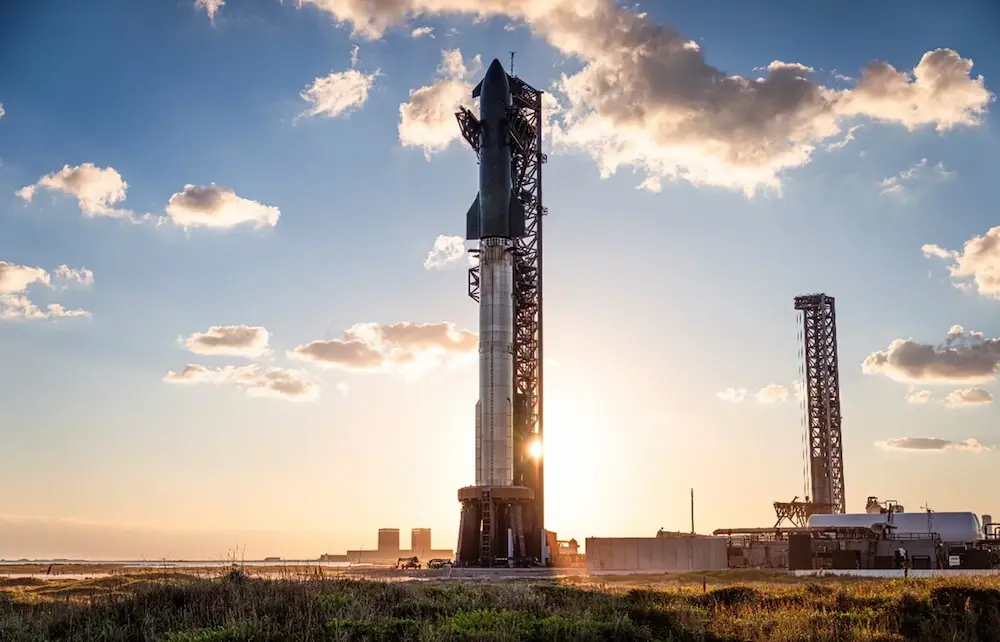 Technology
SpaceX’s Starship has changed the conversation around heavy-lift rockets simply by existing at full scale. On raw numbers, it now stands above the Sat…
Read more